Your roof already does the hard part. Gutters and downspouts for rainwater collection just need a screened, covered barrel and a safe overflow path away from your foundation.
This page covers one piece of the topic; the wider guide to rainwater harvesting puts it in context.
| Item | Value |
|---|---|
| Rain landing on one square foot of roof in a one-inch rain | 0.6 gallons |
| Example yield of a 1,200 sq ft roof in a one-inch rain | About 750 gallons |
| Example flow from 300 sq ft draining to one downspout | About 185 gallons |
| Rain barrel sizes described by one county | 30 to 100 gallons |
| Suggested lift on bricks or cinder blocks | 6 to 18 inches |
| Keep overflow from saturating soil near a foundation | Within 10 feet |
The figures come from University of Nebraska–Lincoln Extension and the Oakland County Water Resources Commissioner. They can change, so check the sources before you rely on them.
How much water each downspout carries
Start with the roof, because the area draining to a single downspout decides how much water you have to catch. As a rule, 0.6 gallons of water falls on one square foot of roof during a one-inch rain, according to University of Nebraska–Lincoln Extension.
The same source gives a formula: roof area in square feet, times rainfall in inches, times 0.623, gives gallons. A typical 1,200 sq ft roof could yield approximately 750 gallons from a one-inch rain, as the NebGuide works out.
Most roofs split their flow across several downspouts. If one-fourth of that roof, or 300 sq ft, drains to a single downspout, about 185 gallons could head for the barrel in a one-inch rain, and a typical 55-gallon container would overflow, the same guide notes.
One inch is a common design figure because roughly 90 percent of rain events in Nebraska are one inch or less, per the extension guide, though your own climate may differ. Once you know the flow, the page on what size rain barrel or tank do i need helps match storage to roof area.
A rough estimate from the ground is enough to begin:
- Measure the length and width of the house, then estimate the roof overhang, often about two feet (Nebraska Extension).
- Add two times the overhang width to both the length and the width, then multiply the results to get the approximate roof area (Nebraska Extension).
- If the house is not rectangular, estimate each section separately and add the sections together.
- Judge what share of the roof drains to your chosen downspout, using views from several spots on the ground or an aerial photograph.
What a gutter-to-barrel setup needs
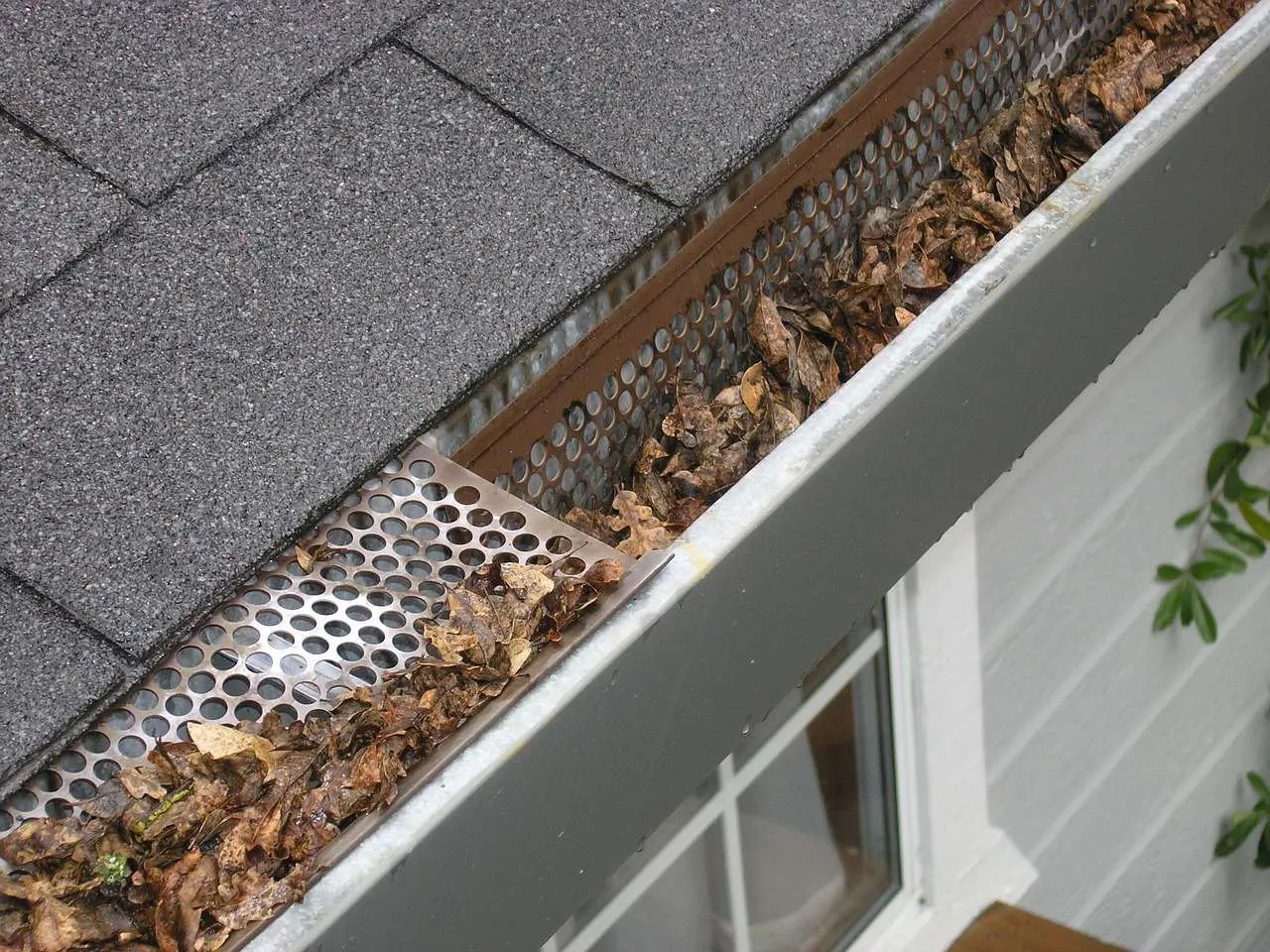
The Oakland County page lists six primary components of a rainwater harvesting system, starting with the roof surface, the collection and conveyance system, and pre-screening, as the county explains. Collection and conveyance means the gutters, downspouts and diverter systems that channel runoff into the barrel, and the county says to keep gutters and downspouts clean and free of debris and rust.
Nebraska’s guide says each container needs five parts, according to University of Nebraska–Lincoln Extension:
- Cover: solid or screened, to keep out mosquitoes, leaves, debris, pets and wildlife. A secure cover also stops children from crawling inside, and a removable one makes cleaning easier.
- Screen or filter: placed on the gutter, at the barrel inlet, or at both.
- Inlet: where water enters. With a solid cover, a small opening can take a downspout extension.
- Outlet: usually a spigot, which the county says should accept a garden hose.
- Overflow outlet: a port that lets surplus water leave in a controlled way.
On pre-screening, Oakland County treats leaf screens and gutter guards as the minimum for typical barrels. The separate page on the first flush diverter looks at another way to manage what the gutters send into the barrel.
Routing the downspout into the barrel
Installation means you will need to cut or modify your existing downspout so that rooftop runoff is diverted into the barrel, according to Oakland County. Rules on collecting rainwater and altering a building vary by place, so check your local rules first.
A workable order of jobs:
- Pick a downspout near a lawn, garden or other area that would benefit from frequent watering, and decide how you will use the water.
- Choose a level, stable spot that does not block a walkway, basement entrance or electric meter.
- Raise the barrel on bricks or cinder blocks, adding 6 to 18 inches of elevation, so it sits higher than where you will use the water and the spigot is easy to reach (Oakland County).
- Cut or modify the downspout so the runoff goes to the barrel.
- Join the inlet to the downspout, then attach a garden hose to the outlet.
- Run the overflow to a safe place, as the next section describes.
Two layouts are common. With a solid cover, a downspout extension runs into a small inlet; with a mostly open but screened top, the barrel sits directly beneath a shortened downspout, though Nebraska Extension warns that excess water may overflow more readily out of this type of opening.
Where the overflow should go
Overflow is the part most setups underplan. The county says it should not cause standing water or saturate soil within 10 feet of any building foundation, and that barrels must be watertight to prevent water damage near a building (Oakland County).
Nebraska’s guide says overflow must go into additional barrels, or to a designated landscape area or other permeable surface away from building foundations, per University of Nebraska–Lincoln Extension.
If one barrel is too small, you have options. Barrels come in sizes from 30 to 100 gallons, according to Oakland County. Containers larger than 100 gallons are called cisterns, and two or more barrels can be linked for more capacity, as the Nebraska guide describes.
Does roof material matter for the water you collect?
Yes, because water quality depends on both the debris that gets in and the roofing it flows over, says Oakland County. In summer, extreme heat may cause rooftop materials to release chemicals that wash off with the rain.
The county asks you to think carefully about the eventual use of water from roofs covered with:
- asphalt sealcoats
- tar and gravel
- paint or treated wood
- metal that contains lead
- any material that may contain asbestos
For questionable water, the same page advises against watering food gardens, giving it to pets to drink, or any use involving significant body contact (Oakland County). Barrel color matters too: Nebraska Extension recommends dark or opaque containers, since light-colored ones let in sunlight that encourages algae.
Keeping the system working through the year
A few habits keep a downspout-fed barrel dependable, based on Oakland County’s guidance:
- Clean the inflow screen or filter periodically so it does not clog.
- Clear leaves, debris and rust from gutters and downspouts.
- Check that the cover and screen still keep mosquitoes out.
- Disconnect the barrel each winter and reconnect it in spring, unless it is made of a material designed for freezing temperatures.
Frequently asked questions
Do I have to cut my downspout?
Show answer
In most layouts, yes. Roof water has to be steered into the barrel instead of onto the ground, which Oakland County’s page describes as modifying the existing downspout (source). Confirm local rules and any building requirements before you start.
Can I reuse an old container as a barrel?
Show answer
Possibly. For home-built barrels, Nebraska Extension suggests a food-grade container or one that never held toxic materials or harsh chemicals, and it rules out anything that held oil or a pesticide (source).
Is the water from my barrel drinkable?
Show answer
This site makes no claim that collected rainwater is fit to drink. Ask your local health authority about potability, and note that the Oakland County page itself cautions against some uses of questionable roof runoff.
Why route roof water into a barrel at all?
Show answer
Otherwise it tends to rush onto hard surfaces and into storm drains, then on to streams, rivers and lakes, carrying pollutants with it (Nebraska Extension). A barrel also gives you a supply that stays usable during water restrictions or drought, as Oakland County points out.