Wondering whether your bill matches what you use? Learning how to read a water meter takes minutes: find the meter, read the dials or digits, then watch the leak indicator with every tap off.
This guide is one part of our wider series on how to save water at home, where a meter reading is a handy first step.
| Item | Value |
|---|---|
| Unit shown on the meter | Cubic metres |
| Litres in one cubic metre | 1,000 litres |
| One full turn of the low flow indicator | 1 litre |
| Wait between readings in the two-reading leak test | 2 hours |
| Extra cost of household leaks on a water bill | Approximately 10 percent |
These figures come from the City of Waterloo meter guide and the City of Mercer Island meter page. They can change, so check the source before you rely on them.
Where to find your water meter
Where the meter sits depends on the home and the local climate. In the City of Waterloo’s guidance, most meters are in the basement near the main water control valve.
If it is not there, the city suggests looking in these places:
- The furnace room
- The utility room
- Near the hot water tank
In milder areas the meter is often outside. The City of Santa Barbara describes a gray plastic or cement rectangular box in front of the house, close to the street or sidewalk, and says a screwdriver in the hole on top lifts the cover off.
Still stuck? Ask your local water utility. The City of Mercer Island, for example, invites residents to phone its water utility to find out where a meter is.
How to read a dial meter
A dial meter shows your use on a row of dials. It also has a low flow indicator that moves whenever water passes through. Depending on the brand, Mercer Island says this could be a small triangular dial in black, white or silver, or a small silver wheel.
- Make sure no water is running inside or outside the house, including faucets, showers and the dishwasher.
- Open the lid or the meter box.
- Read the dials to get your use in cubic metres.
- Watch the red triangle or wheel: Waterloo says it spins counter-clockwise while water is running.
On the same Waterloo page, each full turn of the indicator equals 1 litre of water. If it keeps moving when nothing is on, you might have a leak.
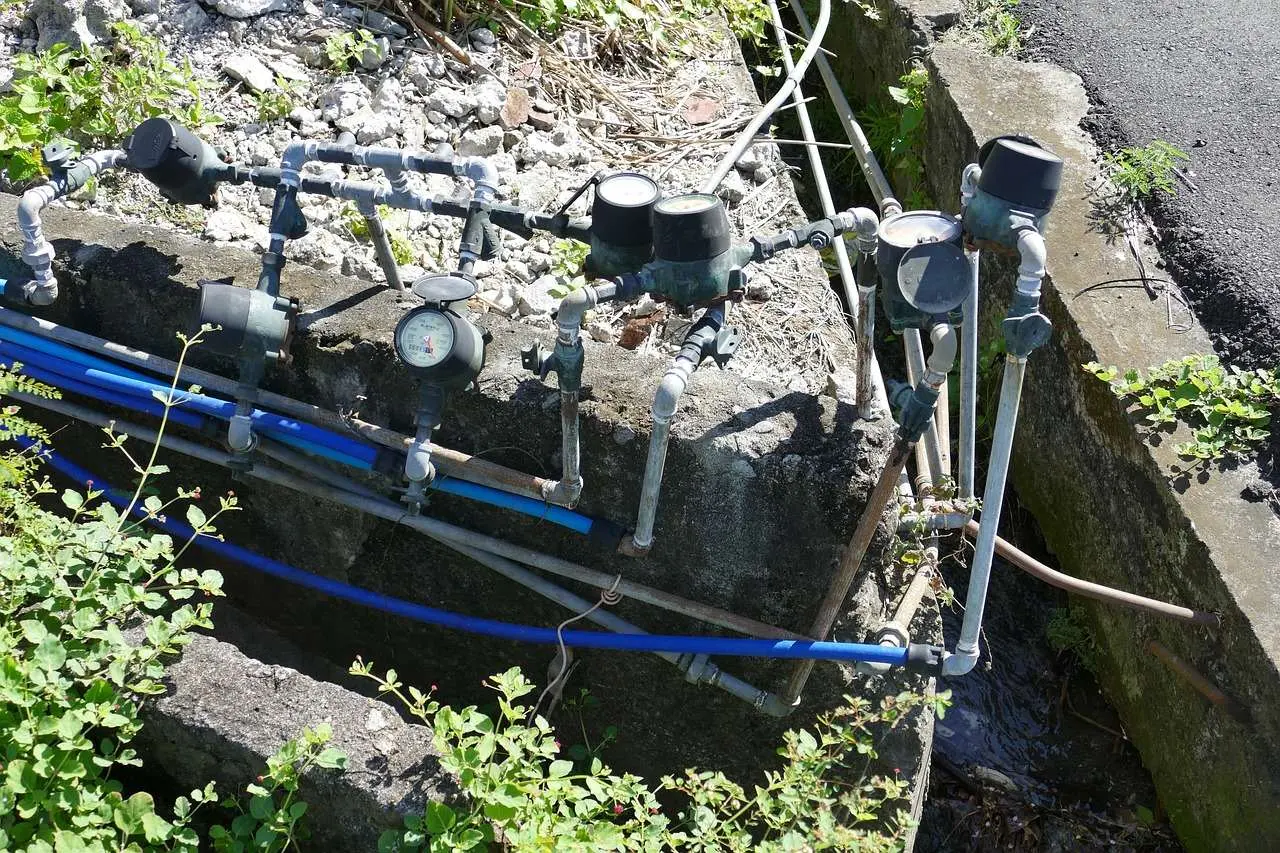
Needle-style meters work the same way. Santa Barbara notes that a red needle, like the hand of a clock, or a small rotator moves as water flows through the meter.
How to read a digital meter
A digital meter is simpler because it shows the number directly. Waterloo’s steps are to open the lid to wake the display, then read your use in cubic metres from the screen.
Watch the last digit while no water is in use. If it moves, the same page says you may have a leak.
The unit is worth a second look. Your meter counts in cubic metres, and 1,000 litres make one cubic metre, according to Waterloo. The city also says that same cubic-metre figure is used to work out the sewage charge.
Using your meter to find leaks
A meter is a free leak detector, and a quick check is the best place to start. Turn off everything that uses water, then look at the indicator. Mercer Island says that if the dial is moving, you have a leak.
Slow leaks need a bit more patience. Use one of these two methods:
- Pen mark: mark the needle’s position on the meter face with a pen, wait without using any water, and check whether it has moved past the mark. Santa Barbara suggests returning after one hour or longer.
- Two readings: note the reading, wait 2 hours with no water used, then read again. Mercer Island says any change points to a leak.
Is the leak inside or outside?
Next, find your home’s main shut-off valve and turn the water off there. Then repeat the check.
- If the indicator stops, or the readings stay the same, the leak is inside the house, most likely the toilet.
- If it keeps moving, the leak is outside between the meter and the house, and you will need a plumber.
Those results follow the Mercer Island guidance.
Checking the toilet
For a suspect toilet, Waterloo suggests putting a few drops of food colouring in the tank and waiting one hour without flushing. If coloured water shows up in the bowl, the toilet is leaking, as the city’s leak checklist explains.
The effort can pay off. Mercer Island states that household leaks add approximately 10 percent to a water bill and can reach over 10,000 gallons a year per home, according to its meter page.
If you are also weighing up where indoor water goes, a companion piece on dishwasher vs washing dishes by hand water use covers one common kitchen habit.
What to do when the reading looks wrong
Start by comparing the number on the meter with your bill. Waterloo says you can compare the two, and that a mismatch or a low reading is a reason to contact the utility, per its meter guide.
If the bill layout is the confusing part, our explainer on how to read a water bill walks through it.
A faulty meter can also cause surprises. The same Waterloo page says that if a meter stops working or shows a low reading, the city may estimate the bill until it can repair or replace the unit.
Contact your own utility for a leaking, noisy or wrong-reading meter. Rules and procedures differ from one place to another.
Frequently asked questions
Can a water meter overcharge me?
Show answer
Waterloo explains that a meter counts only what passes through it. Wear tends to make older units under-record rather than over-record, according to the city’s guide.
Why is the indicator moving when nothing is running?
Show answer
Movement with every tap closed suggests water is escaping somewhere in the plumbing. Rule out a toilet first, then use the shut-off valve test described above to work out whether the problem is indoors or outdoors.
How long should I wait to spot a slow leak?
Show answer
It depends on the method. Santa Barbara advises an hour or longer for the pen-mark check, while the Mercer Island two-reading approach waits 2 hours.
What if I cannot find my meter?
Show answer
Check the basement, utility room or furnace room, or look for a box near the street. If that fails, phone your water utility and ask where it is.