Do your garden beds dry out within days of watering? Mulching to save water is the simple fix: a layer of mulch covers bare soil, slows evaporation and lets you water less often.
This guide is part of our water wise gardening series on using less water outdoors.
| Item | Value |
|---|---|
| Organic mulch depth | 3 to 4 inches |
| Inorganic mulch depth (gravel, crushed stone) | 2 to 3 inches |
| Straw in vegetable beds | 6 to 8 inches |
| Fine materials such as grass clippings | 2 to 3 inches |
| Evaporative water loss from mulched soil around trees, shrubs and flower beds | Ten-fold reduction |
| Typical life of a fabric weed barrier | About 5 years |
These figures come from Utah State University Extension and Iowa State University Extension. Guidance can change, so check the sources before you rely on them.
How mulch keeps soil moist
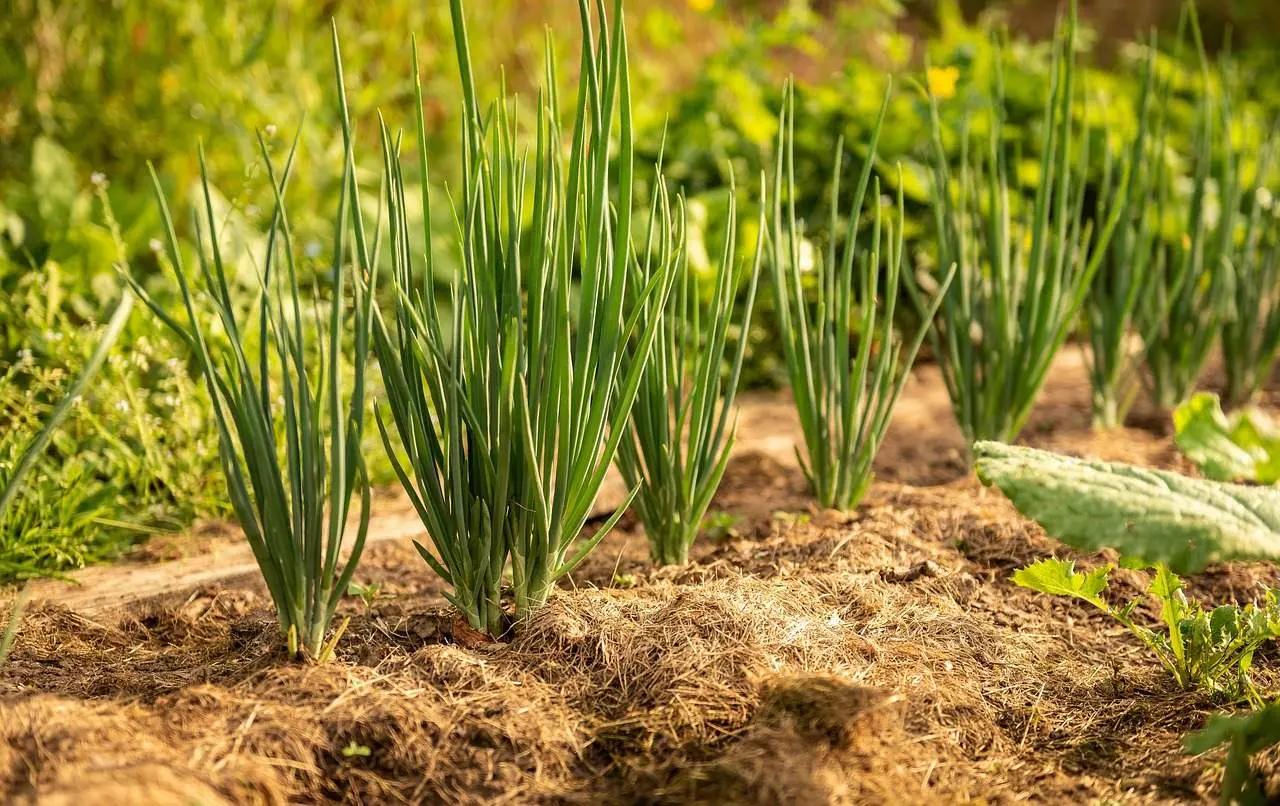
Bare soil loses water from its surface to sun and wind. A mulch layer shields that surface, and Iowa State University Extension says mulching reduces the rate of evaporation from the soil surface while also limiting weed competition (source).
Utah State University Extension goes further: mulching around trees, shrubs and in flower beds can bring a ten-fold reduction in evaporative water loss from soil. Less water lost means more reaches the plants and less has to be supplied (source).
The same Utah State page lists several side benefits of a mulch layer:
- It prevents soil crusting and compaction.
- It reduces weeds by blocking the light that triggers weed seeds to germinate.
- It moderates soil temperature and protects plant roots.
Choosing between organic and inorganic mulch
Organic mulches come from plants. Iowa State lists grass clippings, clean weed-free straw and shredded leaves as excellent choices for the vegetable garden, and wood chips and shredded bark for trees, shrubs and perennials (source).
As they break down, organic materials can improve soil structure and add organic matter. Utah State also calls mulch a good way to recycle yard waste such as pruned wood, fallen leaves and grass clippings, provided the material is free of weed seeds, disease organisms and pesticide or herbicide residues (source).
Inorganic mulches include gravel, crushed stone, lava rock, recycled tumbled glass and cobblestones. Utah State says they give the same moisture retention and temperature moderation as organic types, and they drain well, which suits a bed of drought tolerant plants that dislike wet roots (source).
The trade-off is that stone adds no fertility or organic matter, so plants need watching for signs of nutrient deficiency.
How deep should mulch be?
The right depth depends on the material and the site. Utah State recommends 3 to 4 inches for organic mulch and 2 to 3 inches for inorganic mulch (source).
Iowa State gives more specific depths (source):
- Wood chips and shredded bark around trees and shrubs: 3 to 4 inches.
- Fine materials, such as grass clippings, in the vegetable garden: 2 to 3 inches.
- Straw in the vegetable garden: 6 to 8 inches.
If you are buying in bulk, Utah State estimates that a 2-inch layer needs about 6 cubic yards of material per 1000 square feet of area (source).
When and how to apply mulch
Utah State says the best time is immediately after planting in the fall, or in the spring once the soil has warmed (source). A simple order of work follows from the two extension pages:
- Pick a material that matches the bed: straw or clippings for vegetables, chips or bark for trees, shrubs and perennials.
- Check that the pieces are larger than the soil particles underneath, usually larger than a half inch in diameter, so water and air still pass through.
- Spread the layer to the depth listed above for your material.
- Leave a few inches of mulch-free soil around the base of woody plants.
- When topping up an old layer, roughen it first so a water-resistant crust does not form between old and new mulch.
Common mulch problems and fixes
Fresh wood or bark can cause a temporary nitrogen deficiency, because the microorganisms that break down these high-carbon materials use up nitrogen the plant would otherwise get. Utah State suggests composted mulch or an added nitrogen feed, and advises watching for yellowing that starts on older leaves (source).
Under the mulch, a weed barrier is optional. Landscape fabrics that allow air and water through are the better choice, and Utah State advises avoiding plastic sheeting because it tears easily, can overheat roots in direct sun and blocks water and air exchange with the soil (source).
Fabric barriers should last about 5 years under normal conditions. Once organic mulch on top has decomposed, weeds can grow in it, so replace that layer instead of just adding more (source).
Making mulch part of a wider water plan
Mulch slows loss from the soil surface, so the water you do apply goes further. It works best alongside efficient delivery, and our guide on how to install drip irrigation explains one way to put water at the roots.
Chopped leaves, clean straw and pruned material from your own yard can fill much of the need, which keeps both cost and waste down.
Frequently asked questions
Does mulch mean I can stop watering?
Show answer
No. Mulch cuts the amount of water lost from the soil, so less has to be supplied, but plants still need moisture. Keep checking the soil and adjust gradually.
Can I use my own grass clippings or leaves?
Show answer
Yes, as long as they are clean. Home-grown material should come from plants that were not treated with pesticide or herbicide, and it should be free of weed seeds and disease. Composting it first is one way to deal with those risks.
Why keep mulch away from trunks and stems?
Show answer
Piling it against woody plants invites trouble. Utah State links a bare ring at the base to preventing root collar diseases and rodent damage.
How often does mulch need replacing?
Show answer
Organic mulch breaks down over time and needs topping up, while stone and gravel do not decompose and need replacing only infrequently, according to Utah State University Extension (source).