Worried about your water bill or a dry summer? Water wise gardening comes down to a few habits: water deeply and early, mulch the soil, improve it with compost, and choose plants that cope with dry spells.
| Item | Value |
|---|---|
| Drip and deep-root systems | Up to 60% of all water used in garden care saved |
| Mulch or compost layer for beds | A two-inch layer |
| Mulch for potted plants | About an inch |
| Mulch for flowerbeds | At least a couple of inches |
| Split watering when water runs off | Two or more sessions |
| Preferred watering time | Early in the day |
The figures come from the Louisiana Land Conservation Assistance Network and Water Use It Wisely. Recommendations like these can change, so check the sources before you rely on them.
Why saving garden water pays off
A healthy garden needs water, but many people waste a lot of it. The guide from Water Use It Wisely says that if you pay by how much you consume, conserving water can greatly reduce your expenses.
The same guide adds that the natural environment is under the greatest water stress when demand peaks. It also says drought conditions seem to be becoming more common and more severe with climate change.
The good news is that small changes add up. The sections below follow the order you would work in a yard: how you water, how the soil holds water, what you plant, and how the water gets to the roots.
How do you water deeply instead of often?
The Louisiana guidance is short: water infrequently, deeply and thoroughly. According to the Louisiana Land Conservation Assistance Network, this encourages rooting and greater tolerance to dry spells, because plants send out extra roots in dry conditions to seek water.
Longer, less frequent sessions also encourage deep root growth, says the same page. It notes that plants often bloom more profusely when stressed, though that is no reason to let them wilt.
Timing matters as much as volume. These points come from the two sources above:
- Water early in the day, especially as the weather warms, to reduce evaporation loss.
- Avoid the heat of the day, when the highest proportion of water is lost to evaporation. Gardeners are split between early morning and evening.
- If water runs off your yard, split your watering into two or more sessions so the soil can absorb it.
- Water when a drought is forecast rather than after it begins, which gives the soil time to take it in.
The Water Use It Wisely guide also warns that plants wilting in the midday heat should not wait for the evening, because help may come too late. For the morning-versus-evening debate, see our guide to the best time of day to water plants. If you want a rhythm for your own beds, the guide on how often should i water my garden goes further.
Soil and mulch: keep water where roots can use it
Soil type changes how water behaves. The Louisiana Land Conservation Assistance Network explains that water does not easily penetrate clay soils, while in sandy soil it passes too quickly beyond the root zone of plants.
Its fix for both is organic matter. Adding it to clay and sandy soils increases the penetrability of clay and the water holding capacity of sand.
Compost works in a similar way. Water Use It Wisely says compost can absorb many times its own weight in water, so you will need to water less frequently.
A mulch layer on top then slows evaporation. The two sources suggest these depths:
- A two-inch layer of mulch or compost for beds, per the Louisiana guidance, applied to shrubs, trees, annuals, vegetable gardens and even containers.
- About an inch for potted plants, per Water Use It Wisely.
- At least a couple of inches for flowerbeds, from the same guide.
Mulch also helps with weeds, which compete with your plants for water. Pulling them and mulching to keep them from returning is the Louisiana advice. Our page on mulching to save water covers materials and application in more detail.
Choosing plants that need less
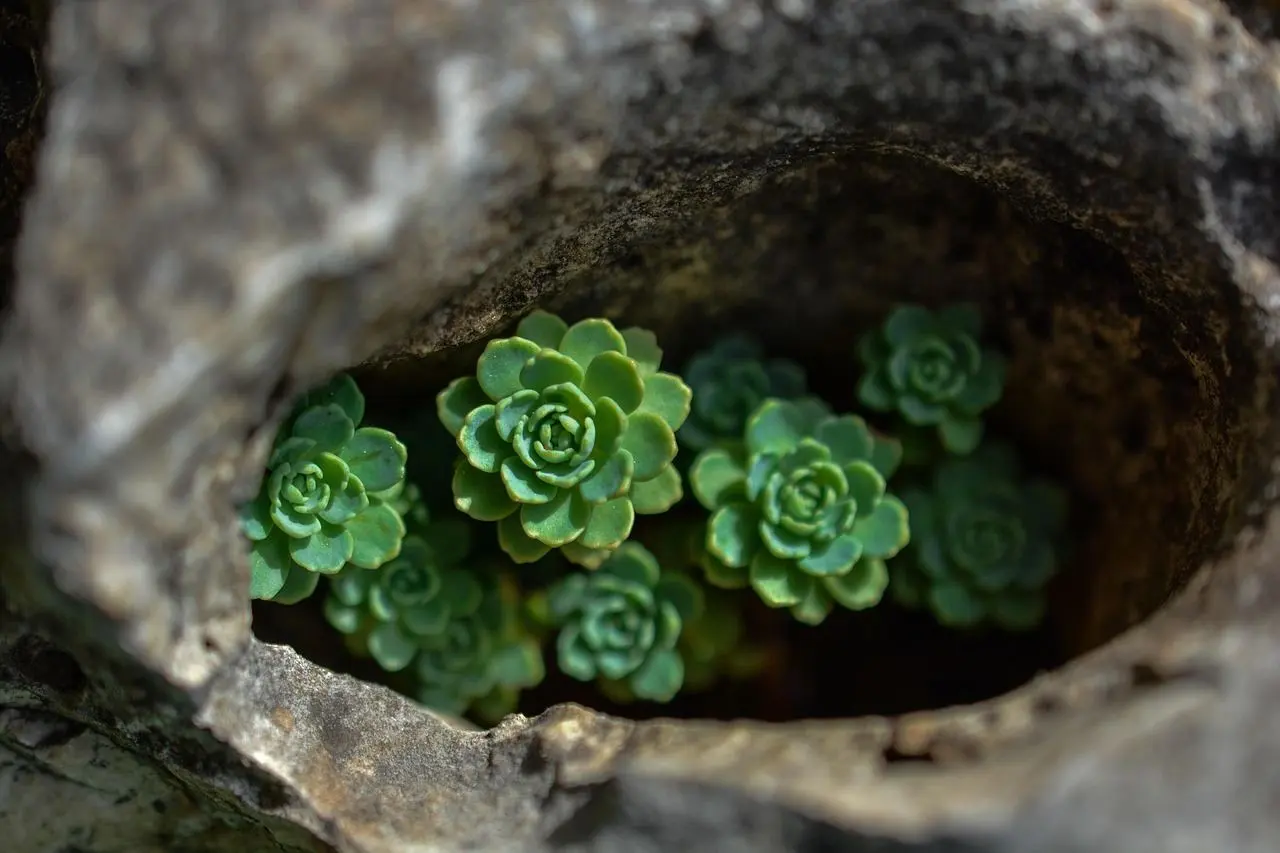
If you live where restrictions apply, Water Use It Wisely suggests growing species that naturally need less water. Traits to look for include:
- Smaller plants.
- Narrow leaves.
- Grey or silver leaves, which reflect radiation and reduce evaporation.
- Leathery or curled leaves.
The same guide says to avoid plants with large, green leaves, plants that need lots of fertilizer, and fast growers, which it calls water guzzlers. Newly planted vegetation also consumes more water, so give new additions extra attention.
One trap is mistaking drought-tolerant for low-water. Many such plants have evolved to take up as much water as possible when it is available, so overwatering them wastes it. Our guide to drought tolerant plants helps you pick sensibly.
Plant choice also applies to turf. If a thirsty lawn is the biggest water user in your yard, look at lawn alternatives. For a whole-yard plan built around low-water planting, read about xeriscaping.
Delivery: drip, hoses and containers
How water reaches the roots decides how much is lost on the way. The Louisiana Land Conservation Assistance Network says slow drip and deep root watering systems can save up to 60% of all water used in garden care. Whatever system you use, keep it in proper working condition.
If you are ready to set one up, read how to install drip irrigation.
If drip does not suit your garden, the Louisiana page recommends a hand held hose over a sprinkler. Water Use It Wisely agrees that sprinklers are good for large areas, especially turf, but can use up huge quantities of water and are not well targeted.
A few habits from that guide help either way:
- Use a nozzle on a hose to control the flow.
- Water at the base of plants, which also avoids feeding weeds in the surrounding area.
- Set an automatic sprinkler timer correctly and adjust it as conditions change.
Containers dry quickly. The Louisiana guidance suggests moving them to partial shade in hot, windy areas, and our page on how to water potted plants covers the rest.
Where rainwater and household habits fit in
Stored rain is one way to cover garden demand. Our overview of rainwater harvesting explains the basics, and local rules on collecting it vary, so check yours before you install anything.
Garden savings sit alongside what happens indoors. The guide on how to save water at home covers the rest of the household.
Frequently asked questions
Can I overwater drought-tolerant plants?
Show answer
Yes. According to Water Use It Wisely, many of them absorb everything they are given, so generous watering can leave them using more than your other plants.
Should a wilting plant wait for evening watering?
Show answer
No. The same guide says that if you see wilting in the midday heat, waiting may leave you with dead plants, so give it water right away.
Is a sprinkler or a hose better for saving water?
Show answer
A hose or watering can delivers water to the base of each plant, while sprinklers suit large areas such as turf. Using a nozzle lets you control the flow.
Do weeds really affect my water use?
Show answer
They do. Weeds have the same needs as your other plants and take water from them, so mulching and pulling them keeps more in the soil for what you want to grow.