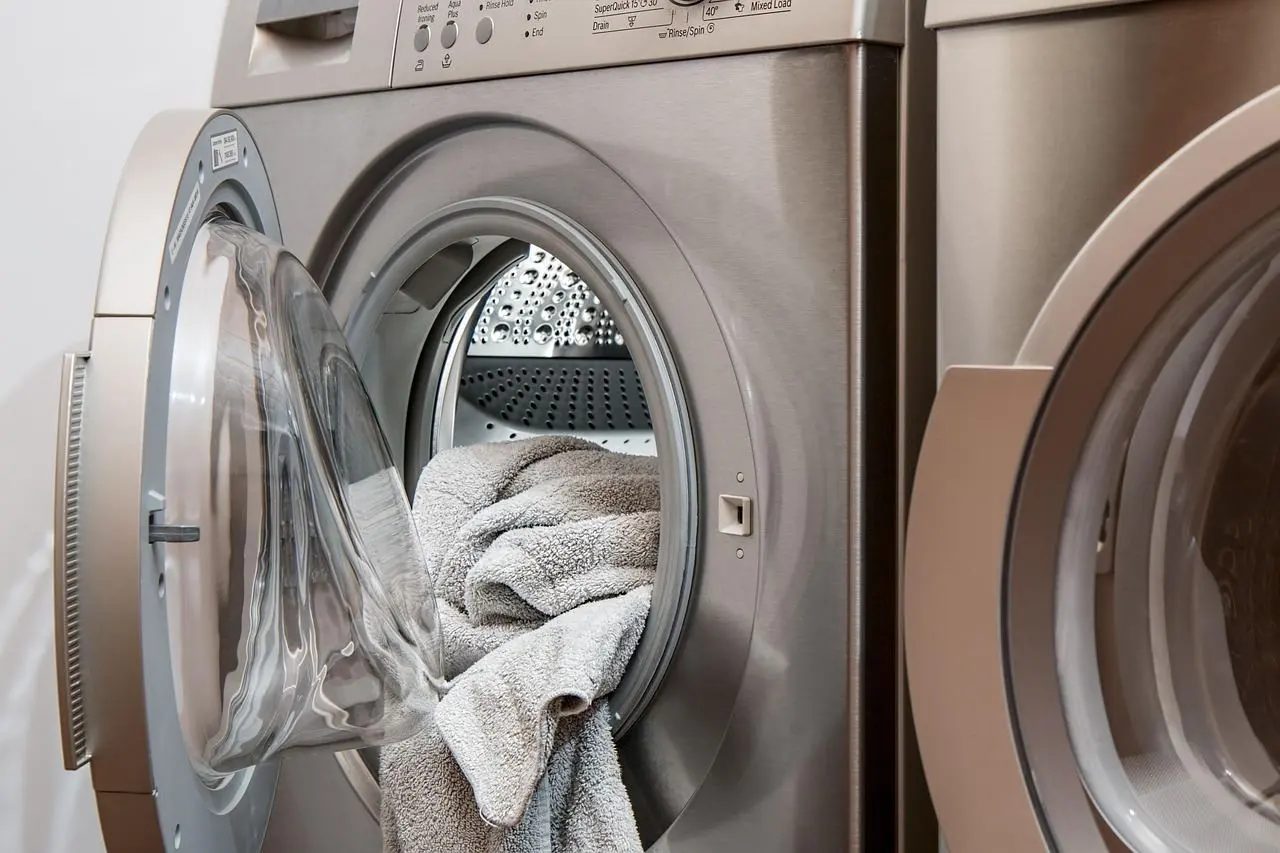
Worried about your water bill and the laundry pile? A water efficient washing machine is usually an ENERGY STAR certified front loader: full-sized models use 14 gallons per load, against 20 gallons for a standard one.
This guide sits within the wider topic of how to save water at home, where the washing machine is one of the biggest single appliances to look at.
| Item | Value |
|---|---|
| Water per load, ENERGY STAR full-sized washer | 14 gallons |
| Water per load, standard machine (ENERGY STAR comparison) | 20 gallons |
| Water use of a certified front loader versus a top load agitator washer | about 50% less |
| Water per load, conventional washer (Penn State course notes) | approximately 40 gallons |
| Share of a washer’s energy that heats the water | 85-90 percent |
| Loads of laundry in a typical household each year | nearly 300-400 loads |
The figures come from ENERGY STAR’s clothes washer page for its 2025 Most Efficient list and Penn State’s clothes washer course notes. They can change as standards and models change, so check the sources before you rely on them.
How much water does a washing machine use?
Penn State’s course notes say a conventional washer uses approximately 40 gallons of water per load. The same notes say a typical household completes nearly 300-400 loads of laundry per year, so the per-load figure adds up quickly (Penn State).
A home-improvement guide from Bob Vila reports that most older-style top loaders use between 30 and 45 gallons for each load of laundry. It adds that standard top-load machines, particularly older models, are the least efficient when it comes to water usage (Bob Vila).
Newer certified machines sit far lower. ENERGY STAR says full-sized washers that have earned its label use 14 gallons per load, compared with 20 gallons per load for a standard machine (ENERGY STAR). The sources define a “standard” machine differently, which is why the Penn State baseline above is higher.
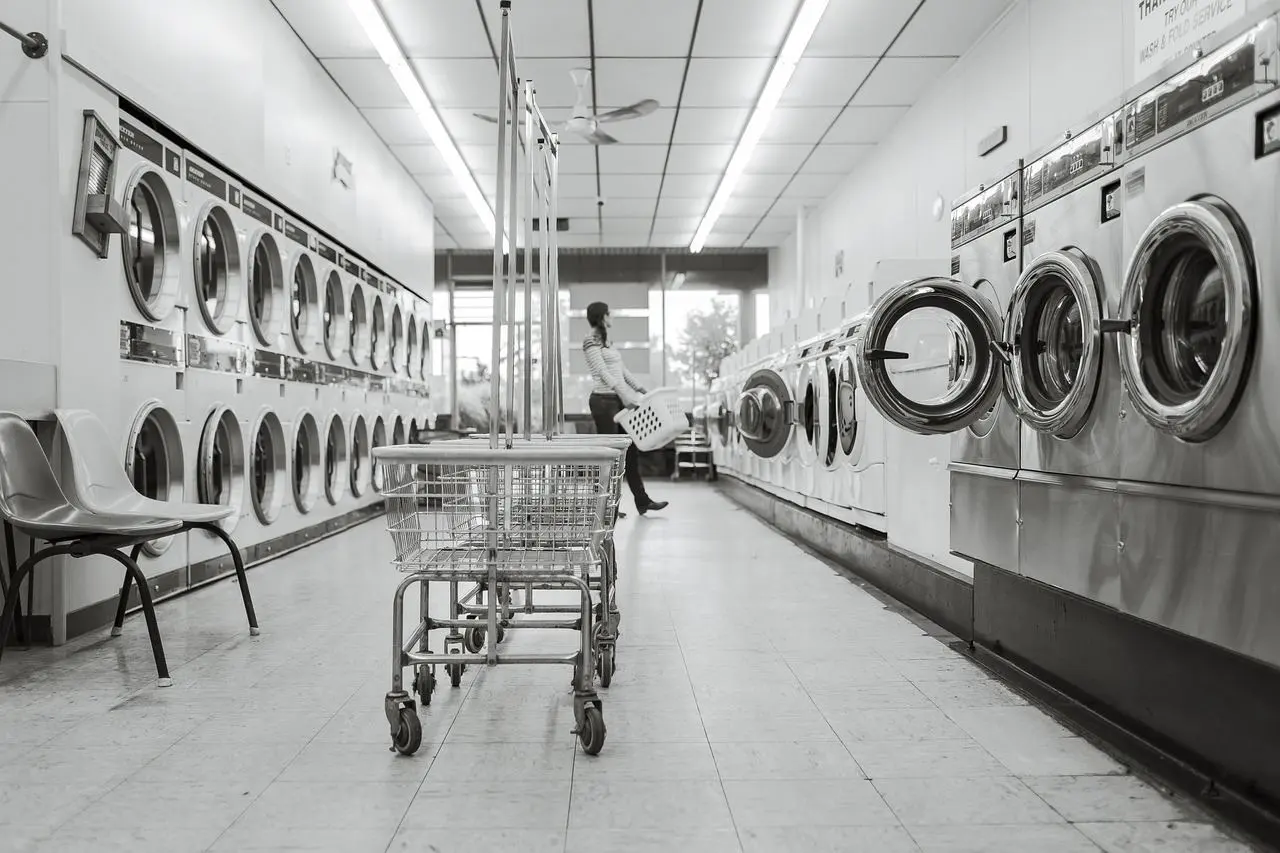
Front load, top load agitator and impeller washers
ENERGY STAR states that certified front load washers use about 45% less energy and 50% less water than a top load agitator washer (ENERGY STAR). The difference comes mostly from how the drum is filled.
Penn State explains that a top loader with a central agitator must fill the tub completely to cover the clothes, so it generally uses more water and more energy to heat it. A front loader instead tumbles the load repeatedly through a small pool of water at the bottom of the drum (Penn State).
Top load impeller washers swap the agitator for a low-profile cone or disc and have become popular as a more efficient option than traditional top loaders. Even so, ENERGY STAR says front load washers are still about 25% more energy and water efficient than an impeller model (ENERGY STAR).
Here is how the three designs line up on the points the sources cover:
- Top load with agitator: fills the whole tub, so it uses the most water and the most energy to heat it.
- Top load with impeller: a middle option that avoids the agitator and is more efficient than the traditional design.
- Front load: the most efficient of the three, and it generally holds more clothes because no central agitator takes up space (Penn State).
What to check when choosing a model
ENERGY STAR’s buying guidance points to a few labels and ratings that show up on every certified listing. Work through them in this order:
- Integrated Water Factor (IWF). This measures water efficiency in gallons of water consumed per cubic foot of capacity, and the lower the IWF, the more water efficient the clothes washer (ENERGY STAR).
- Integrated Modified Energy Factor (IMEF). A higher IMEF means a more energy efficient machine, which matters because heating water is the main energy cost.
- The yellow EnergyGuide label. ENERGY STAR says it shows the model’s energy use, lets you compare similar models and helps you estimate annual operating costs.
- Size and shape. Certified models come in stackable, under-the-counter and combination washer-dryer designs that fit smaller spaces, so match the drum to your usual load.
- The Most Efficient list. ENERGY STAR publishes a yearly Most Efficient group for products with cutting edge efficiency; its 2025 list is the latest the source page shows.
Both IWF and IMEF are listed for every model in the ENERGY STAR Product Finder, so you can compare them side by side before you buy.
Habits that save water in any washer
A new machine is not the only lever. Small changes to how you run the one you already own can trim water use, and the same habits help a new machine do better.
- Wash full loads. Penn State notes that washers are most efficient when operated at full capacity (Penn State).
- Use the load-size setting. Most washers offer different cycle settings for large and small loads, so pick the smaller one when the drum is not full (Bob Vila).
- Skip the extra rinse. Bob Vila says that if you skip the extra rinse cycle, you will drastically reduce water usage since the drum will not be filled with another round of water.
- Use HE detergent when your machine calls for it. Without a low-sudsing detergent, the washer may go through multiple rinses to eliminate all the suds, wasting more water.
Saving up a full load’s worth of laundry before washing also decreases the total water you need compared with several smaller loads, according to the same guide.
Hot water and the rest of the household
Water and energy are linked in laundry. Penn State estimates that 85-90 percent of the energy a clothes washer uses goes toward heating the water, while only 10-15 percent runs the motor and controls (Penn State).
That is why cold water washing helps: the same notes say it conserves significant energy by avoiding water heating, and it is recommended for colored and delicate fabrics. Less water per load also means less water to heat in the first place.
Laundry is one of several places where a household’s water goes, and a low flow showerhead is another simple change to compare. If you are weighing up kitchen appliances as well, the guide to dishwasher vs washing dishes by hand water use covers that side-by-side.
Frequently asked questions
Is a front load washer always the better choice for saving water?
Show answer
In ENERGY STAR’s comparison, front loaders come out ahead of both agitator and impeller top loaders. The gap over impeller models is much narrower than over agitator machines, so an efficient impeller washer can still be a reasonable pick if a top loader suits your space (ENERGY STAR).
What does a low IWF number tell me?
Show answer
IWF stands for Integrated Water Factor. It relates a washer’s water use to the size of its drum, so a smaller number means less water for the same amount of laundry (ENERGY STAR).
Do I need to replace my machine to use less water?
Show answer
Not necessarily. Running full loads, choosing the right load-size setting and avoiding unneeded extra rinses all reduce water use on an existing washer (Bob Vila).
Why does an extra rinse setting use more water?
Show answer
Each extra rinse involves re-filling the tub with water, so the cycle draws more than it would otherwise (Bob Vila). Use it only when a load truly needs it.
Do a washer’s water savings also cut energy use?
Show answer
Yes, because less water in the drum means less water to warm. Penn State’s notes describe hot water as the largest share of a washer’s energy use, so cutting hot water is the most effective step (Penn State).